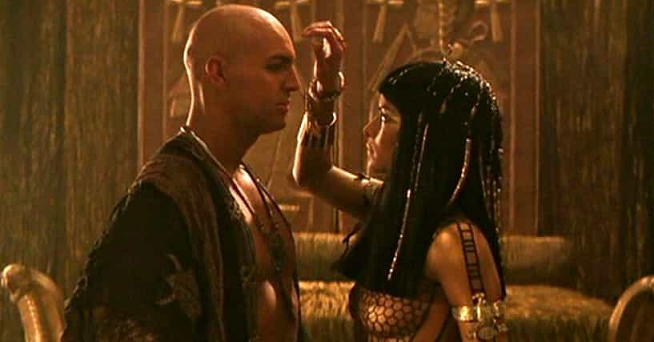
Imhotep is a name that conjures images of Hollywood’s most infamous villains, an iconic mummy whose portrayal in movies has overshadowed his real historical significance, even eclipsing the fame of King Tutankhamun. However, delving into the true story of Imhotep reveals a figure of immense importance in ancient Egypt, far removed from the fictionalized narratives spun by blockbuster films.

Contrary to cinematic depictions, Imhotep was not a fictional creation but a tangible figure in Egyptian history, a commoner who ascended to extraordinary heights, eventually being deified into a god-like figure. His story begins during the late 27th century BC, a period marked by the reign of King Djoser, the first ruler of the Third Dynasty. Imhotep’s role as an official and architect was pivotal, as he spearheaded the construction of Egypt’s first pyramid, the Step Pyramid at Saqqara. This monumental achievement marked the first widespread use of stone material in pyramid complexes, revolutionizing Egyptian architecture.
Imhotep’s significance during King Djoser’s reign is underscored by the honors bestowed upon him. His name was inscribed alongside the king’s on a royal statue, a rare privilege that reflected his elevated status. Imhotep’s titles, including Chancellor, Seal Bearer of the King of Lower Egypt, and High Priest of Heliopolis, highlight his multifaceted role as a respected member of the court and a key figure in overseeing Djoser’s major projects.

While there are suggestions of familial ties between Imhotep and King Djoser, concrete evidence remains elusive. Nevertheless, Imhotep’s influence extended beyond Djoser’s reign, as evidenced by a graffito found near the unfinished pyramid of Djoser’s successor, King Sekhemkhet. This continuity in architectural design suggests Imhotep’s enduring impact on successive pyramid projects.
Imhotep’s posthumous legacy underwent a transformation over the centuries. It wasn’t until around 1391-1353 BCE, during the reign of King Amenhotep III, that Imhotep’s name resurfaced, signaling the beginning of a cult-like reverence for him. Offerings were made in his name, and he was equated with the god Thoth, associated with healing abilities despite no historical records supporting his medical involvement. Imhotep’s lineage was mythologized, depicting him as the son of the god Ptah and a mortal named Khereduankh or sometimes the goddess Sekhmet.
One notable tale that gained prominence during Ptolemaic Egypt recounts Djoser’s dream of famine and Imhotep’s role in advising the king to appease the god Khnum, ultimately ending the famine. This story, immortalized on a stela, contributed to Imhotep’s growing reputation as a wise and benevolent figure.

However, Imhotep’s historical narrative took a dramatic turn in 1932 with the release of the first mummy movie, portraying him as a malevolent force resurrected from the dead. Subsequent films in the late 20th century, particularly the 1999 remake starring Brendan Fraser, further cemented Imhotep’s image as an evil mummy seeking revenge. These cinematic adaptations, while entertaining, veered far from the factual accounts of Imhotep’s life and achievements.
In reality, Imhotep was a visionary architect, scholar, and advisor whose contributions shaped ancient Egypt’s architectural landscape. His transformation from a mortal official to a deified figure reflects the evolving cultural and religious beliefs of ancient Egyptians. While Hollywood may have immortalized Imhotep as a cinematic villain, his true legacy as a pioneering figure in Egyptian history endures, reminding us of the complexities and richness of our shared human heritage.

Comments