
The Great Sphinx of Giza is one of Egypt’s most famous monuments, standing proudly near the pyramids on the Giza Plateau. With the body of a lion and the head of a man, this colossal statue has fascinated people for thousands of years. But how much do we really know about it? From its creation and role in ancient Egypt to the mysteries of its missing nose, this article explores the story behind the Great Sphinx and why it remains such an iconic symbol of Egypt today.

What Is the Great Sphinx?
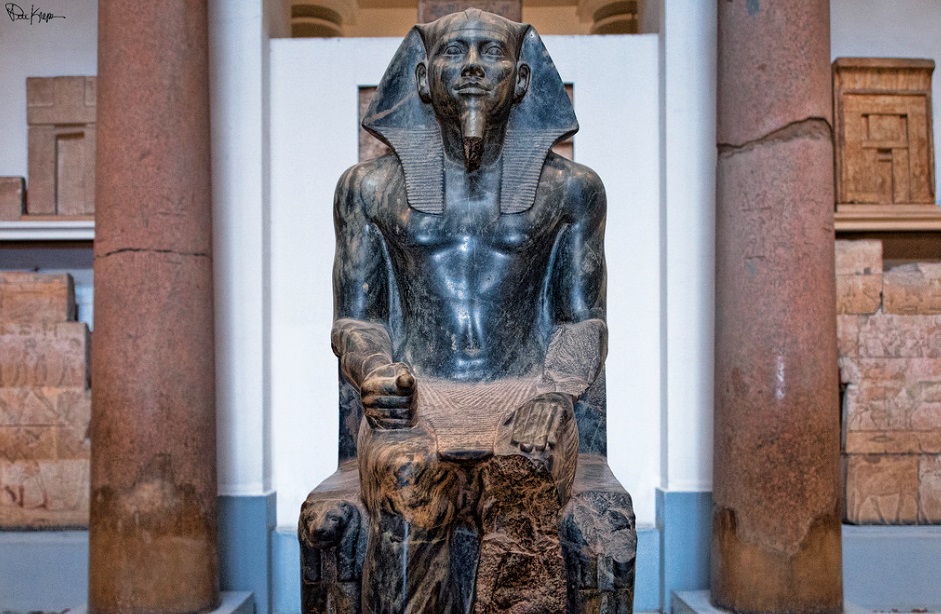
The Great Sphinx is a massive limestone statue, stretching 240 feet long and standing 65 feet tall. It was carved directly from the bedrock of the Giza Plateau and is believed to have been built around 4,500 years ago during the reign of the Pharaoh Khafre, who also constructed one of the famous pyramids nearby. The Sphinx has the body of a lion and the head of a pharaoh, symbolizing strength, power, and wisdom.
Why Was the Sphinx Built?
The purpose of the Sphinx is still debated, but many believe it was created to guard the pharaoh’s tomb and the nearby pyramids. In ancient Egypt, the lion was a symbol of protection, and the human face represented the wisdom of the ruler. By combining these two elements, the Sphinx likely served as a guardian for the Giza necropolis, where the kings of Egypt were buried.
Who Built the Great Sphinx?
The Sphinx is widely believed to have been built during the reign of Pharaoh Khafre, around 2540 BCE. Archaeologists have found evidence connecting the statue to his pyramid complex, and it aligns with his tomb on the Giza Plateau. However, there are some theories that suggest the Sphinx may be even older, with some scholars pointing to the Inventory Stela, which says the Sphinx was restored during the time of Khufu, Khafre’s father. Despite these alternative theories, most experts agree that Khafre is the most likely builder.
How Was the Sphinx Made?
The Great Sphinx was carved directly from a natural limestone outcrop on the Giza Plateau. Workers used simple tools like hammers and chisels to shape the statue, and additional limestone blocks were added to parts like the paws. Over the years, the Sphinx has suffered from erosion due to wind and sand, and efforts to preserve and restore it have been ongoing since ancient times.
The Mystery of the Missing Nose
One of the most famous features of the Great Sphinx is its missing nose. Many legends have tried to explain how the Sphinx lost its nose. Some stories say that Napoleon’s soldiers shot it off with a cannonball during their invasion of Egypt. However, sketches made before Napoleon’s time show the Sphinx already without a nose. The more likely story comes from the 14th century, when a religious figure named Muhammad Sa’im al-Dahr damaged the Sphinx out of anger, believing that local villagers were worshipping it.

What Happened to the Sphinx’s Beard?
Fragments of a royal beard were found near the Sphinx in the 1800s, suggesting that the statue once had a beard. It’s believed that this beard may have been added during a restoration effort by Pharaoh Thutmose IV in the New Kingdom, around 1400 BCE. Thutmose IV cleared the sands from around the Sphinx and claimed that the sun god had promised him the throne in exchange for his efforts. The remnants of the beard are now displayed in museums.

The Sphinx and the Pyramids: A Sacred Site
The Sphinx was part of a larger complex that included temples, causeways, and the pyramids of Giza. It is positioned facing the rising sun, and some researchers believe it was connected to the sun god Ra. The area around the Sphinx was used for religious rituals and royal ceremonies. Over time, the sands of the desert buried the Sphinx up to its neck, and it wasn’t fully uncovered until the early 20th century.
Restoring the Sphinx: Keeping a Legend Alive
Throughout history, the Great Sphinx has faced damage from both natural forces and human activities. The winds and sands of the desert have eroded its stone, and some parts of the Sphinx, like the nose and beard, have been lost. In the modern era, archaeologists have worked hard to preserve and restore the statue, adding limestone blocks to reinforce it and protect it from further decay. These efforts continue to this day, with ongoing projects to safeguard the Sphinx for future generations.

The Sphinx Around the World
The Great Sphinx has become a symbol of ancient Egypt and has been copied in monuments around the world. From Las Vegas to China, replicas of the Sphinx can be found in various places, showing its lasting influence. The image of the Sphinx is also seen in art, films, and literature, keeping its story alive in popular culture.
The Sphinx’s Mysteries and Myths
Throughout history, the Sphinx has been surrounded by myths and legends. In ancient Greek mythology, the Sphinx was seen as a creature that posed riddles and killed those who couldn’t answer correctly. While the Greek version was different, the idea of the Sphinx as a mysterious figure has persisted. Many people still wonder about the secrets of the Sphinx, from its missing nose to its true origin, making it a subject of endless fascination.
The Great Sphinx of Giza remains one of the most incredible achievements of ancient Egypt. Despite the mysteries surrounding it, the Sphinx continues to capture the imagination of people worldwide. Standing tall for over 4,500 years, it is not only a symbol of Egypt’s past but also a reminder of the ingenuity and creativity of the ancient Egyptians. As restoration efforts continue, the Sphinx will endure as a timeless guardian of the pyramids and a testament to Egypt’s enduring legacy.

Comments