
In 1817, Giovanni Belzoni, an Italian explorer, made an intriguing discovery in the Valley of the Kings. He stumbled upon a tomb, not adorned with any paintings, which had been previously searched by ancient explorers. Inside this tomb, Belzoni found a sizable chamber with a lone pillar at its center. The walls were un-plastered, revealing a raw and untouched quality.
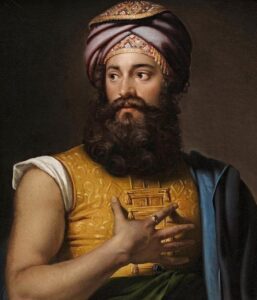
In one corner of this chamber, Belzoni and his team encountered a remarkable sight – two mummies lying on the ground, devoid of any clothing or casing. These mummies were identified as females, their hair still long and surprisingly well-preserved, though it could be easily separated from their heads. This discovery was documented by Belzoni in his notes from that period.
Fast forward to modern times, specifically September of an unspecified year, and we encounter the famed Egyptian Egyptologist Dr. Zahi Hawass. He made headlines by suggesting the potential identification of Queen Nefertiti’s mummy through cutting-edge technologies like CT scanning and DNA analysis. This breakthrough announcement hinted at the long-awaited resolution to a quest that spanned two centuries.
The forthcoming discovery, expected to be officially confirmed by the year’s end, was set to be a central piece in an upcoming exhibition titled “Daughters of the Nile,” focusing on women from ancient Egypt. But who exactly was Queen Nefertiti, and why does her potential discovery hold such significance?
Nefertiti was not only renowned for her striking beauty but also held a prominent position as the Great Royal Wife of King Akhenaten during his unique reign known as the Amarna period. Prior to her marriage to Akhenaten, little was known about Nefertiti or her lineage, except for her sister Mutbenret and her wet nurse named Tey.
During Akhenaten’s reign, Nefertiti was portrayed in unprecedented ways, often depicted alongside him in various scenes, including religious ceremonies and family reliefs. Their partnership extended beyond the traditional roles of a queen, with Nefertiti being depicted in roles typically reserved for kings, such as smiting enemies in boat reliefs.
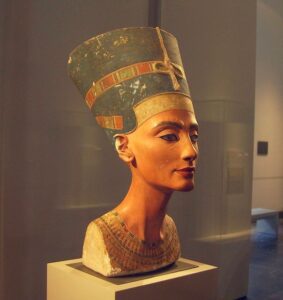
The couple relocated to the new capital of Akhet-Aten (modern-day Tell El-Amarna), which was central to Akhenaten’s religious revolution. He advocated for the worship of the sun god Aten while renouncing traditional Egyptian deities like Amun-Ra. This period also witnessed the rapid construction of Amarna using innovative talatat bricks and the establishment of a necropolis for Akhenaten’s officials and nobles.
Within this context, Nefertiti emerged not just as a queen but as an equal partner to Akhenaten, evidenced by their joint rule and the depiction of their six daughters in historical records. However, by the 17th year of Akhenaten’s reign, his disappearance from historical records signaled the downfall of Amarna and the inevitable end of their era.
The search for Nefertiti’s remains began as early as the initial excavations at Amarna. Over the years, various theories and claims were put forward regarding her burial place and mummy. In 1986, there was speculation about her mummy being discovered in Canada, which turned out to be a different historical figure.
In 2015, archaeologist Nicholas Reeves proposed a theory about Nefertiti’s burial being located in a hidden chamber within King Tutankhamun’s tomb. However, subsequent scans failed to substantiate this claim, leaving the mystery of Nefertiti’s final resting place unresolved.
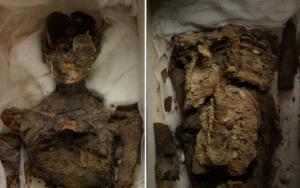
Finally, in September of a later year, Dr. Zahi Hawass’s announcement raised hopes once again. His team’s research, particularly focused on mummies identified as KV21a and b from the 18th Dynasty, hinted at a potential breakthrough. While not conclusive, the data suggested that one of these mummies could be Queen Ankhesenamun, daughter of Nefertiti and wife of King Tutankhamun, while the other mummy might be Nefertiti herself.
If these findings are validated, it could mark the end of a 200-year quest to locate Nefertiti’s remains, offering a definitive conclusion to one of ancient Egypt’s most enduring mysteries. This potential discovery would not only enrich our understanding of Egypt’s royal history but also highlight the significant role women played in shaping its dynasties.

Comments