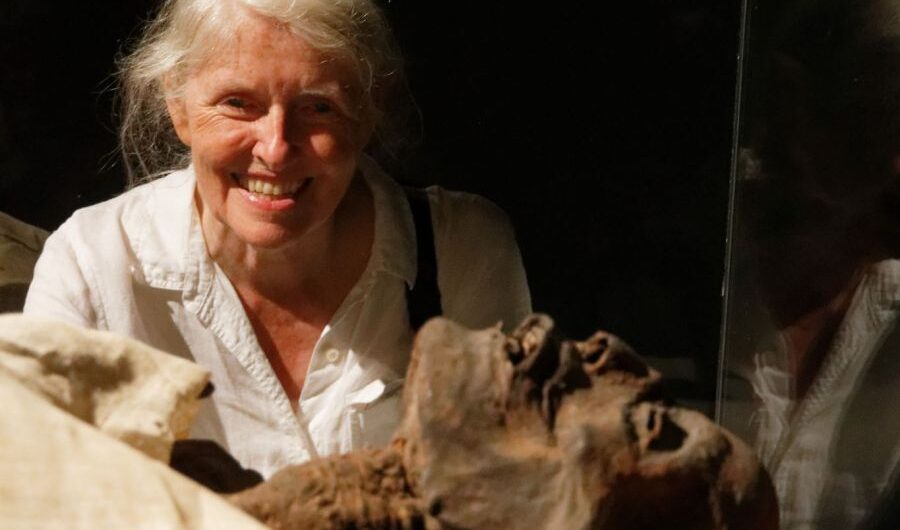
In 2003, Egypt celebrated a significant event: the return of a royal mummy that had been forgotten for over 130 years, hidden away in a freak show museum. This story revolves around the rediscovery and homecoming of a mummy with a surprising identity, one that unraveled over decades of research and investigation.
The tale begins in the 1860s when James Douglas, a businessman, engineer, and physician, ventured to Egypt and acquired antiquities for the Niagara Falls Museum, owned by his friend Sydney Barnett. Among these acquisitions were several mummies, displayed alongside what were termed “freaks of nature” in the museum, lacking proper documentation or detailed labels. One label boldly claimed that one of the mummies was labeled as the wife of King Akhenaten, a claim that largely went unnoticed for many years.
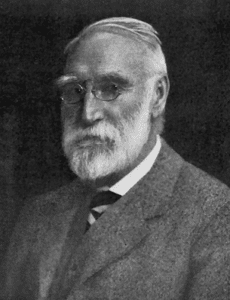
By the mid-1960s, a German architect named Meinhard Hoffman visited the museum and took a particular interest in a mummy believed to be Queen Nefertiti. However, as time passed, Hoffman began to doubt the initial claim as he observed the mummy lacked signs of royalty typically seen in Egyptian queen mummies. Undeterred, he shifted his focus to another mummy in the museum, still convinced it could be Nefertiti.
Hoffman’s pursuit gained traction when he compared the jawbone structure of the mummy to the famous bust of Queen Nefertiti in Berlin. His work garnered attention from the German media, and by the 1980s, Hoffman had become a prominent figure, appearing on television and making bold claims about his discovery.
In 1985, Hoffman’s project gained momentum as he convinced producer Gunter Alt to announce live on German television the unveiling of “Nefertiti at Niagara Falls.” Egyptologist Arne Eggebrecht was brought in for the reveal, but to everyone’s surprise, including Hoffman’s, the mummy turned out to be male, with both arms crossed over the chest, a pose typical of Egyptian kings, not queens.
Despite the disappointment, Hoffman persisted, now theorizing that the mummy could be a king from the New Kingdom era of Egypt. With the help of German radiologist Wolfgang Michael Pahl, they attempted to identify the mummy through X-rays. However, the results were inconclusive, indicating the mummy dated back to Roman times rather than the New Kingdom.
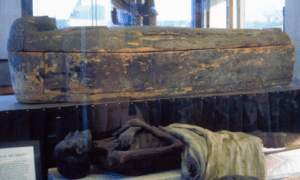
Hoffman’s enthusiasm waned, and the project was suspended, but the story didn’t end there. In the 1990s, academic interest in the mummy surged, leading to a research team, led by archaeologist Gail Gibson, using CT scan technology to study the mummy further. Dr. James Harris supervised this effort, and the results were astonishing: the mummy’s origins traced back to the New Kingdom.
The CT scans revealed meticulous mummification, with the body filled with linen to maintain its shape, and the skull and chest cavity filled with resin, a technique associated with royal mummies. Dr. Harris, drawing on his extensive experience with royal mummies, found striking similarities between the mummy’s features and those of King Seti I and Ramses the Great. The conclusion was clear: this was the mummy of King Ramses I, the founder of the 19th Dynasty and the grandfather of Ramses the Great.
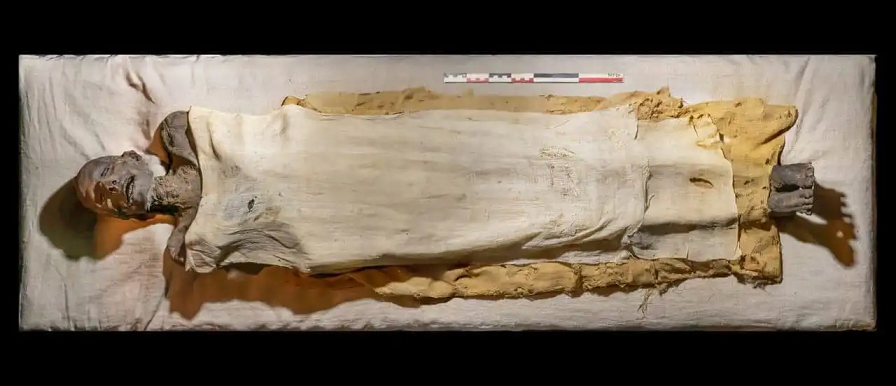
The mystery of how a royal mummy ended up in a freak show museum was unraveled by tracing its acquisition history. Records showed that James Douglas bought the mummy from Egypt, acquired by a Turkish Diplomat agent, Mustafa Aga Ayed, who, in turn, obtained it from the Rasoul brothers. These brothers had discovered a cache of royal mummies at Deir Al-Bahari, selling some before being caught in 1881.
After passing through various hands, the mummy ended up at the Niagara Falls Museum for over a century. In 2003, the museum’s collection was sold to the Michael C Carlos Museum, which later donated the mummy back to Egypt, marking a joyous homecoming for Ramses I. The mummy arrived at the Cairo Museum, where it was honored and welcomed with official ceremonies, signifying the end of a remarkable journey and a poignant moment in Egypt’s history.
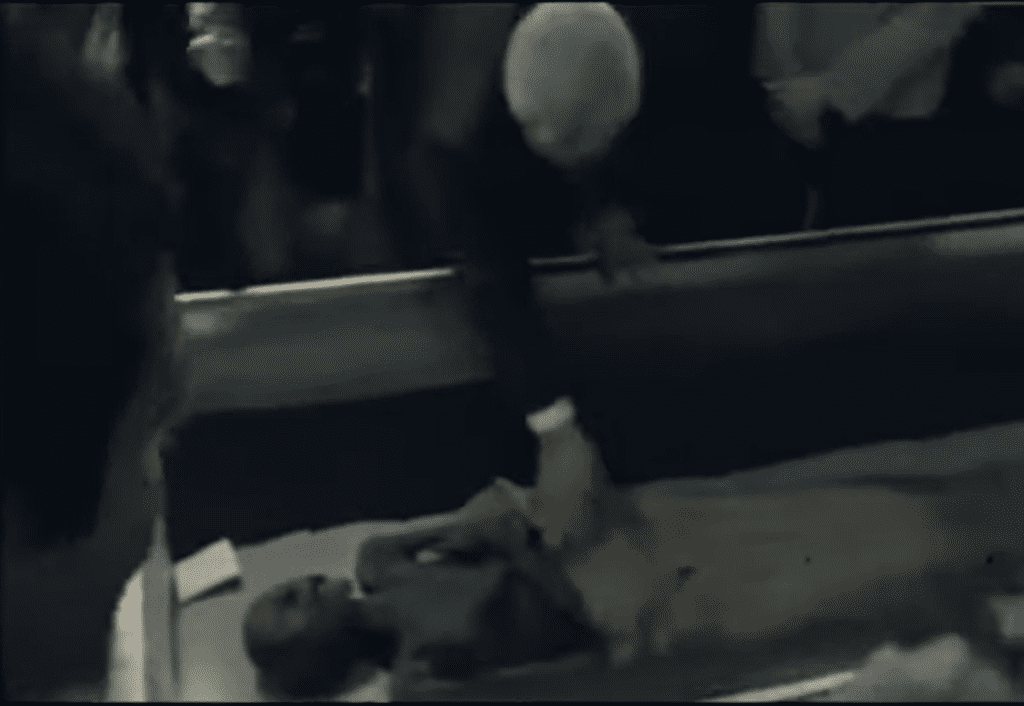
The return of King Ramses I’s mummy not only symbolized the importance of preserving Egypt’s cultural heritage but also highlighted the ongoing efforts to reclaim lost artifacts from around the world. It served as a reminder that unique artifacts like this belong in their rightful home, contributing to a deeper understanding of ancient civilizations and their legacies.

Comments