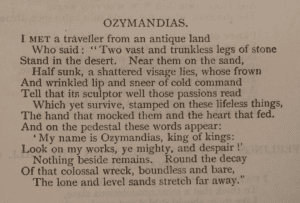
I met a traveler from an antique land Who said: Two vast and trunkless legs of stone Stand in the desert. Near them, on the sand, Half sunk, a shattered visage lies, whose frown, And wrinkled lip, and sneer of cold command, Tell that its sculptor well those passions read Which yet survive, stamped on these lifeless things, The hand that mocked them and the heart that fed. And on the pedestal these words appear: “My name is Ozymandias, king of kings: Look on my works, ye Mighty, and despair!” Nothing beside remains. Round the decay Of that colossal wreck, boundless and bare The lone and level sands stretch far away.
Percy Shelly;s Ozymandias
This tale, immortalized in Percy Shelley’s poem “Ozymandias,” served as a prelude to a larger saga of exploration and rediscovery. It was a saga that unfolded in the early 19th century, amidst the backdrop of European fascination with the treasures of ancient Egypt. The first scientific foray into documenting Egyptian monuments came with the French campaign led by Napoleon in 1797. The results of this endeavor were the renowned ten volumes of “Description of Egypt,” which cataloged and researched almost every aspect of the country, except for the remote reaches of Nubia, where Abu Simbel lay buried beneath the sands.
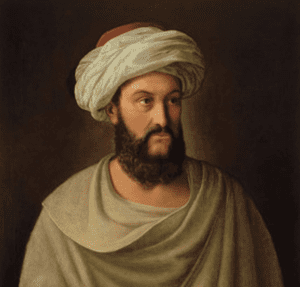
It wasn’t until March of 1813 that a Swiss traveler, Johann Ludwig Burckhardt, known locally as Sheik Ibrahim for his fluent Arabic and traditional attire, stumbled upon the buried temples of Abu Simbel. The temples, engulfed by centuries of desert sands, presented an enigmatic puzzle to Burckhardt, who couldn’t discern whether the monumental statues at the entrance were standing or sitting. His return to Cairo ignited curiosity and interest in Abu Simbel, eventually capturing the attention of Henry Salt, the first British Consul in Egypt.
Johann Ludwig Burckhardt
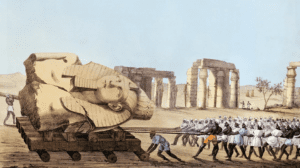
Salt, driven by a fervent desire to acquire Egyptian antiquities for the British Museum, enlisted the services of Giovanni Batista Belzoni, a larger-than-life Italian explorer and former circus performer known as “Patagonian Samson.” Belzoni’s prowess in hydraulics and his daring exploits made him the ideal candidate for ambitious archaeological endeavors. Under Salt’s patronage, Belzoni embarked on a series of daring missions, including the audacious theft of a colossal statue of Ramses II from the Ramesseum temple, an act that inspired Shelley’s iconic poem.
Operation Ozymandias
Operation Ozymandias marked the beginning of a new era of exploration and excavation in Egypt. Belzoni’s subsequent expeditions, including his arrival at Abu Simbel in August 1817, laid the groundwork for further discoveries. Accompanied by British officers James Mangles and Charles Irby, Belzoni embarked on the monumental task of excavating the buried temples. The painstaking process involved recruiting local laborers and meticulously clearing the sand-entombed structures.
As Belzoni delved deeper into the Great Temple of Abu Simbel, his efforts bore fruit in the form of detailed drawings and documentation. His companions left their names etched on the temple walls, marking a historic moment in the annals of archaeology. The unearthing of Abu Simbel heralded a new chapter in Egyptology, drawing the attention of explorers and scholars from around the world.
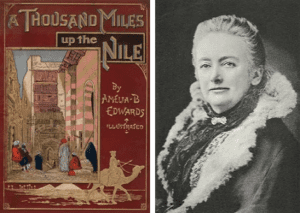
Abu Simbel’s prominence soared with the discovery of its solar alignment phenomenon by Amelia Edwards in the 19th century. The alignment, occurring on February 21st and October 21st, captured the imagination of observers, symbolizing the timeless connection between celestial movements and human artistry. However, a modern intervention would alter the temple’s cosmic dance.
A Thousand Miles up the Nile,Amelia B. Edwards
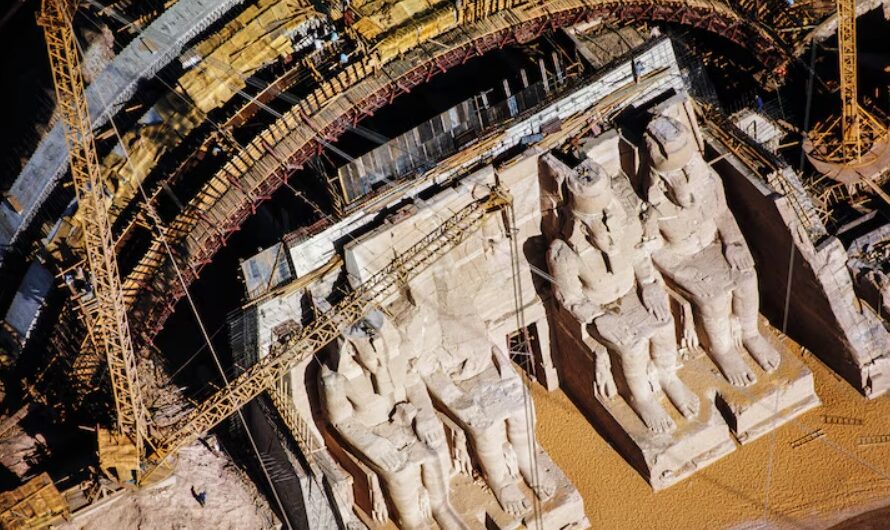
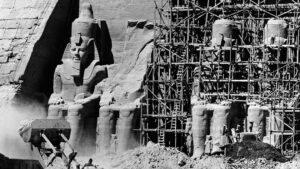
In 1959, an international effort spearheaded by UNESCO aimed to safeguard Egypt’s Nubian monuments, including Abu Simbel, from the rising waters of the Nile due to the construction of the High Dam. The monumental task of relocating the temples became a testament to human ingenuity and cooperation. The temples, meticulously cut into blocks and reassembled at a higher elevation, retained their majestic presence in a new setting.
The relocation of Abu Simbel not only preserved the temples for future generations but also shifted the alignment of the solar phenomenon. Today, the sun’s rays grace the statues of Ramses II on the 22nd of February and October, a testament to the enduring legacy of ancient craftsmanship and modern conservation efforts.
Beyond the archaeological endeavors, the legacy of Ramses II endures in various manifestations across Egypt. From the discovery of his colossal statue at Memphis to its eventual display at the Grand Egyptian Museum, Ramses’ monumental presence echoes through millennia. The application of the solar alignment phenomenon to his statue in the museum’s Great Hall signifies a symbolic reunion of ancient artistry and contemporary appreciation.
The Relocation of Abu Simbel Temples
The story of Abu Simbel transcends mere exploration; it embodies a convergence of historical narratives, artistic expression, and preservation endeavors. From the poetic verses of “Ozymandias” to the meticulous excavations of Belzoni and the modern conservation efforts, Abu Simbel stands as a testament to humanity’s enduring fascination with the past and our collective responsibility to safeguard cultural heritage for future generations.
About Author
Ramses XII
Ramses XII is a passionate author and expert tour guide with over 15 years of experience bringing Egypt’s ancient wonders to life. Backed by academic depth and a strong commitment to heritage preservation, he’s known for his engaging publications and unforgettable private tours. Ramses specializes in high-end VIP experiences and cutting-edge Egyptology tours, offering guests a unique blend of luxury, discovery, and true insider knowledge.
* E-mail: ramses@ramsesxii.com
* Cell: +201010014517

Comments