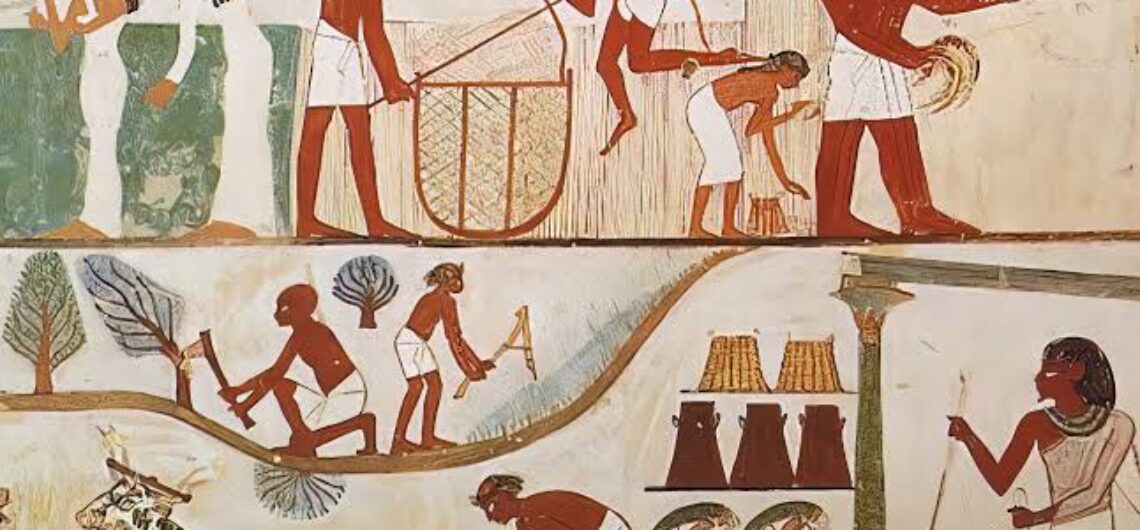

This ancient attendance sheet from 3,200 years ago in Ancient Egypt is quite a fascinating find. It’s carved on limestone and covers 280 days of the year, listing 40 different names and dates in black ink. What makes it even more intriguing are the red notes detailing the reasons for absences:
1. Drinking with Khonsu
2. Daughter’s bleeding
3. Libation to his father
4. Brewing beer
5. Building his house
6. Fetching stone for the scribe
7. Making remedies with Khons
8. Making remedies for the scribe’s wife
9. Eye ailment
10. Embalming Hormose
11. Strengthening the door
12. Embalming his brother
13. Wife’s bleeding
14. Bitten by a scorpion
15. Personal feast
16. Offering to a god
Out of all these reasons, “drinking with Khonsu” caught my attention the most. It seems less dramatic compared to embalming, bleeding, or getting bitten by a scorpion. It stood out because I hadn’t really considered that Ancient Egyptians would just hang out and have a drink together.
While we often get drawn to the grandeur of the pyramids, pharaohs, and mummies, I’ve always been more curious about daily life back then. I imagine people going about their business, working, socializing, and cooking dinner much like we do today.
Speaking of Khonsu, who exactly was he? What was his role or job in Ancient Egyptian society? Was “Khons” just a shortened version of Khonsu, or were they different individuals altogether?
Back in the day, this attendance sheet was probably just mundane bureaucratic paperwork. Yet, reading it 3,200 years later is quite delightful. It’s a reminder that, despite the vast differences in time and culture, humans haven’t changed all that much. Taking a break to socialize and enjoy a drink with a friend was a legitimate reason to miss work even then.
I can’t help but wonder if all these excuses were true or if some were made up to hide the real reasons. It’s a mystery we may never unravel, but that’s part of what makes history so fascinating.

Comments