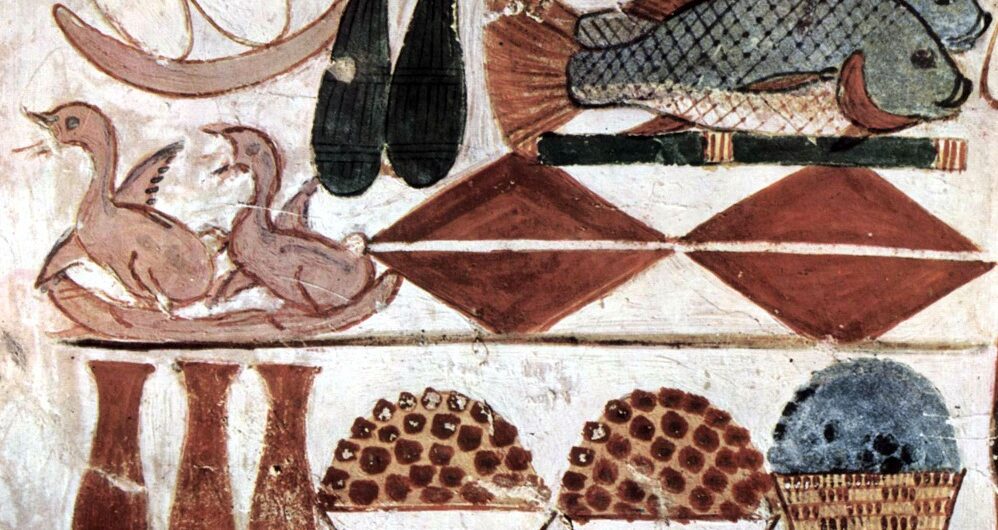
Ancient Egyptian Cuisine The ancient Egyptians enjoyed a diverse and rich diet, with many of their culinary staples echoing modern tastes. In comparison to other ancient civilizations, their access to a variety of high-quality foods was unparalleled, largely thanks to the fertile lands surrounding the Nile River. The Nile not only provided irrigation for crops but also supported livestock and fishing. This abundance allowed ancient Egyptians to cultivate a wide range of foodstuffs that nourished both the wealthy elite and the common people. What Did the Ancient Egyptians Eat and Drink? The diet of ancient Egyptians was built around a few key staples, primarily bread and beer. These two items formed the backbone of their daily meals and were consumed by both the rich and poor. Bread, made from barley or emmer wheat, was baked daily, often with the help of laborious techniques. Women typically took on the task of grinding the grain into flour. In an effort to speed up the process, sand was sometimes mixed in during grinding, which later caused health problems. Many mummies have been found with teeth worn down to the pulp due to years of eating bread laced with sand. The dough, made from flour mixed with water and yeast, was placed into clay molds and baked in stone ovens. Beer was equally important in the daily diet. To make beer, ancient Egyptians used a unique type of bread, known as ‘beer bread.’ This bread contained a higher concentration of yeast and was baked at lower temperatures to keep the yeast culture alive. The bread was then crumbled into water-filled vats and left to ferment, producing a thick and frothy beer that was highly nutritious. Unlike modern beer, this version was consumed out of necessity because the Nile's water was unsafe to drink. The
Ancient Egyptian Cuisine The ancient Egyptians enjoyed a diverse and rich diet, with many of
The Sphinx’s Missing Nose: Myth, Mystery, and the Search for Answers This image shows a reconstruction of the Sphinx in its original, glorious, and fully intact form, vividly colored and pristine. But how did it come to look the way it does today? Who broke its nose? Did the Sphinx once have a beard, and if so, where is it now? What happened to the cobra that once adorned its forehead? Today, however, the monument is missing significant elements, raising questions about its transformation over time. This article explores the Sphinx’s construction, its mysterious missing parts, and the preservation efforts that have taken place over the centuries. This article addresses key questions about the Sphinx, including "Why was the Sphinx built?", "Sphinx mythology,", "Sphinx facts," and "How old is the Sphinx?" providing a deeper look into the history and mysteries surrounding this ancient monument. The Creation of the Sphinx The Sphinx, created around 2500 BC, is widely believed to have been built during the reign of King Khafre, the third king of Egypt's Fourth Dynasty and the builder of the second pyramid at Giza. While many Egyptologists attribute the statue to Khafre, some believe it might represent his father, Khufu. Others suggest that the Sphinx was built during the reign of Khafre’s brother, Djedefre, to honor either Djedefre himself or his father Khufu. The debate remains ongoing. The Sphinx and Prince Thutmose's Dream Around 1400 BC, the Sphinx became submerged in sand. According to legend, during a hunting trip near Giza, a young prince named Thutmose fell asleep in the shadow of the buried Sphinx. In his dream, the Sphinx, identifying itself as the god Horemakhet Khepri Ra Atum, spoke to him: "Look upon me, O my son Thutmose; I am thy father, Harmakhis-Khopri-Ra-Tum. The sand has covered me. Save
The Sphinx’s Missing Nose: Myth, Mystery, and the Search for Answers This image shows a