
The Sphinx’s Missing Nose: Myth, Mystery, and the Search for Answers

This image shows a reconstruction of the Sphinx in its original, glorious, and fully intact form, vividly colored and pristine. But how did it come to look the way it does today? Who broke its nose? Did the Sphinx once have a beard, and if so, where is it now? What happened to the cobra that once adorned its forehead?
Today, however, the monument is missing significant elements, raising questions about its transformation over time. This article explores the Sphinx’s construction, its mysterious missing parts, and the preservation efforts that have taken place over the centuries. This article addresses key questions about the Sphinx, including “Why was the Sphinx built?”, “Sphinx mythology,”, “Sphinx facts,” and “How old is the Sphinx?” providing a deeper look into the history and mysteries surrounding this ancient monument.
The Creation of the Sphinx
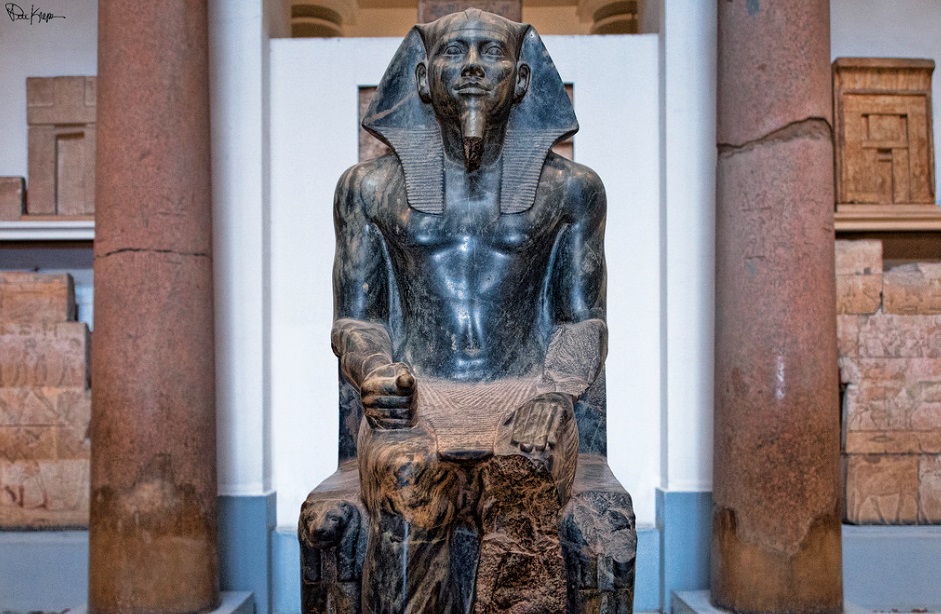
The Sphinx, created around 2500 BC, is widely believed to have been built during the reign of King Khafre, the third king of Egypt’s Fourth Dynasty and the builder of the second pyramid at Giza. While many Egyptologists attribute the statue to Khafre, some believe it might represent his father, Khufu. Others suggest that the Sphinx was built during the reign of Khafre’s brother, Djedefre, to honor either Djedefre himself or his father Khufu. The debate remains ongoing.
The Sphinx and Prince Thutmose’s Dream
Around 1400 BC, the Sphinx became submerged in sand. According to legend, during a hunting trip near Giza, a young prince named Thutmose fell asleep in the shadow of the buried Sphinx. In his dream, the Sphinx, identifying itself as the god Horemakhet Khepri Ra Atum, spoke to him:
“Look upon me, O my son Thutmose; I am thy father, Harmakhis-Khopri-Ra-Tum. The sand has covered me. Save me, and I shall bestow upon thee sovereignty over Egypt.”
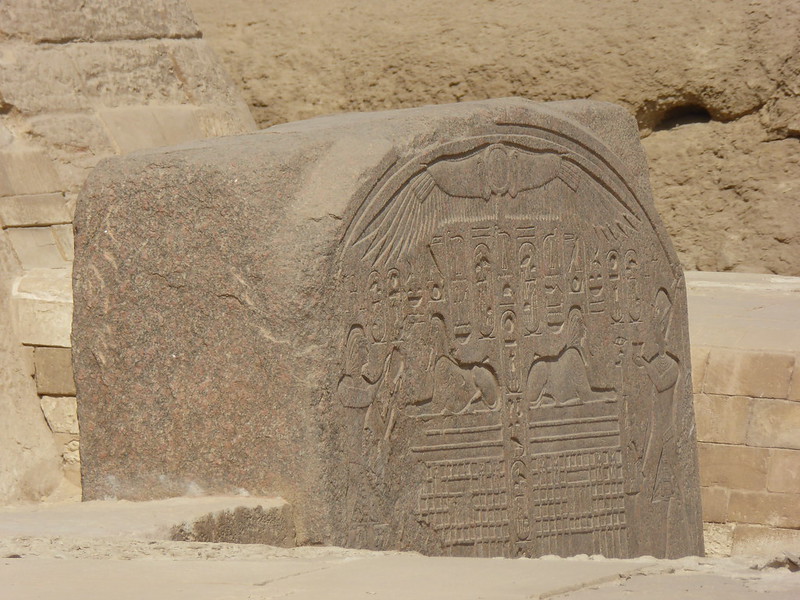
The Sphinx promised Thutmose kingship in return for restoring the statue. Thutmose, later known as Thutmose IV, fulfilled this promise and became king of Egypt. He cleared the Sphinx from the sand and erected a stela between its paws, recording his dream and his restoration efforts. This Dream Stela also connected the Sphinx to King Khafre, providing evidence supporting the statue’s attribution to Khafre.
Later Restoration Efforts
The Sphinx has undergone several restoration attempts throughout history. During the reign of Ramses the Great, his son, Prince Khaemwaset, led projects to restore monuments across Egypt, including the Sphinx. Later, during the Roman period, another restoration was undertaken, during which bricks were added to the body of the Sphinx.
Despite these efforts, by 200 AD, attention to the Sphinx faded. It became submerged in sand once again, and the history surrounding the monument was lost for centuries.

The Mystery of the Missing Nose
One of the most famous features missing from the Sphinx today is its nose. Over the years, various theories have emerged about its disappearance. A popular myth attributes the damage to Napoleon’s soldiers, who allegedly fired cannonballs at the Sphinx. However, drawings from 1755 by Fredric Louis Norden depict the Sphinx already without its nose, ruling out Napoleon’s involvement.

Another account comes from the historian Al-Maqrizi, who claimed that in 1387, a man named Mohammed Sa’im al-Dahr defaced the Sphinx’s nose after witnessing peasants making offerings to the statue. He viewed these acts as idolatrous and was later executed for vandalism. While this theory remains plausible, others suggest natural erosion may have caused the damage, as the limestone from which the Sphinx was carved is fragile and prone to wear over time.
What Happened to the Sphinx’s Beard?
The Sphinx’s beard is another element shrouded in mystery. Debate continues over whether the beard was part of the original statue or an addition by Thutmose IV during his restoration efforts. A significant fragment of the beard was discovered by Giovanni Battista Caviglia during excavations in the early 1800s and was later sent to the British Museum, where it remains today. Additional fragments were uncovered during later excavations and are now housed in the Cairo Museum.

Caviglia also discovered a piece of the Sphinx’s uraeus (the cobra symbol worn on the forehead of royal figures) between the Sphinx’s paws, further suggesting that the Sphinx once displayed the full regalia of a pharaoh.

The Destruction by Dynamite
One of the most destructive events in the Sphinx’s history occurred in 1837 when Howard Vyse, known for using dynamite during his excavations, caused significant damage to the monument. Vyse’s methods left several holes and passages within the Sphinx’s body, further compromising the structure.
The Missing Crown
Depictions of the Sphinx from later periods show it wearing a crown. If this is accurate, the large hole on top of the Sphinx’s head may have served as an anchor point for the crown. Today, like the nose, beard, and cobra, the crown remains absent from the statue.
The Sphinx Today

Despite centuries of wear, damage, and restoration, the Great Sphinx continues to stand proudly on the Giza Plateau, a symbol of ancient Egyptian civilization. While it has lost its nose, beard, and crown, the Sphinx remains one of the most studied monuments in the world, with many of its missing pieces still waiting to return home.
The journey of the Sphinx is one of mystery, transformation, and resilience—its story still unfolding thousands of years after its creation.

Comments