
King Khufu, known as Cheops to the Greeks, is credited with commissioning the Great Pyramid at Giza, near present-day Cairo and Memphis. Unlike his grandfather, Djoser Netjeriket, and his father, Sneferu—both remembered as kind and benevolent rulers—Khufu was described by the historian Herodotus as a harsh and oppressive king.
Khufu’s Horus name was Medjedu, and his full birth name was Khnum-Khufu, meaning “the god Khnum protects me.” Khnum, the local deity of Elephantine near the first Nile cataract, was believed to have created mankind on his potter’s wheel and was also responsible for the proper flooding of the Nile.
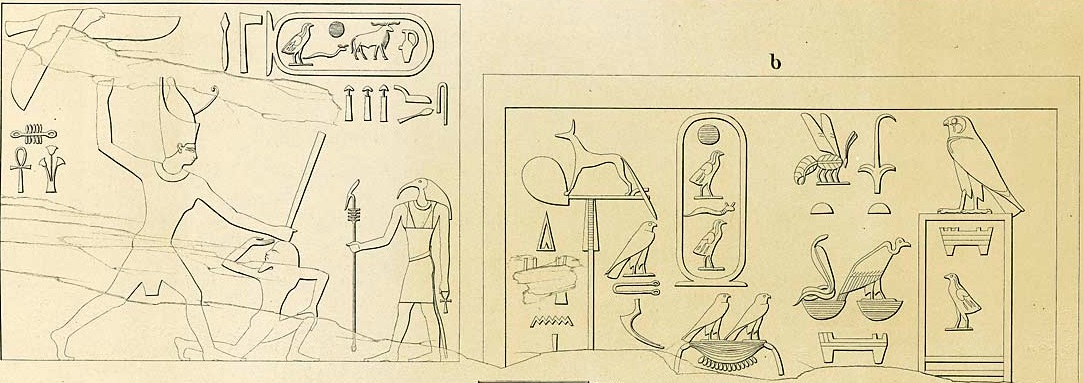
Khufu may have been older when he ascended the throne. His vizier and relative, Hemiunu, served as the architect of the Great Pyramid. Khufu’s principal wife was named Merityotes, and she, along with two other wives, was buried in the smaller subsidiary pyramids located just south of the Great Pyramid’s mortuary temple. Khufu had several sons, including Kawab, his intended heir, as well as Khufukhaf, Minkhaf, Djedefhor, Djedefre, and Khafre. Tales about some of these sons are recorded in the Papyrus Westcar.
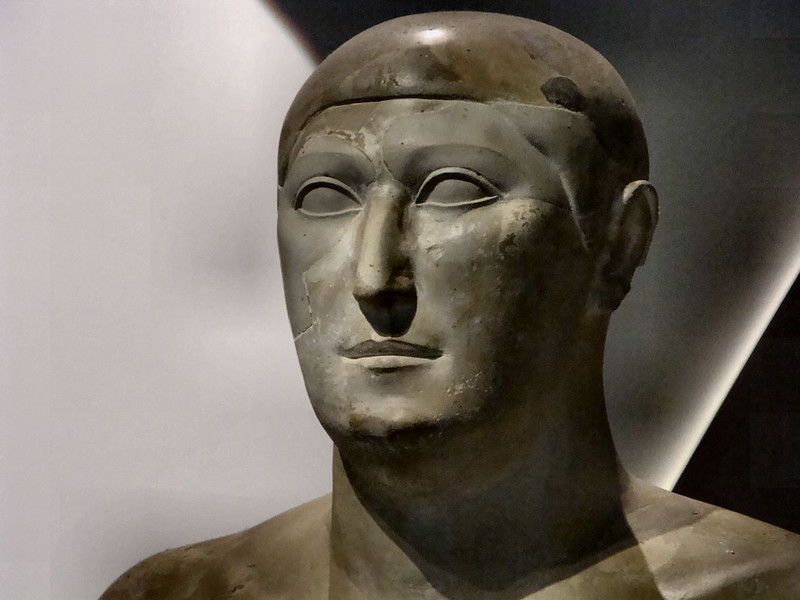
Despite the grandeur of the Great Pyramid, which has become a symbol of ancient Egypt, little is known about Khufu’s reign. He likely ruled for 23 or 24 years. Evidence suggests he led expeditions to the Sinai and worked in the diorite quarries deep in the Nubian desert, northwest of Abu Simbel. Inscriptions at Wadi Maghara record his troops exploiting turquoise mines, and faint inscriptions at Elephantine indicate he likely sourced red granite from Aswan.
Herodotus, writing centuries after Khufu’s reign, claimed that Khufu “brought Egypt into misery,” closing temples, forbidding sacrifices, and forcing the people to labor on his projects. He also mentioned a rumor that Khufu sent his daughter to a brothel to raise money for the pyramid, with each client contributing a block of stone for her own pyramid. While no evidence supports this, there are smaller pyramids belonging to some of Khufu’s daughters.
Even before Herodotus, Khufu’s reputation was questioned in the Papyrus Westcar, a text from the Hyksos period. One story, “Khufu and the Magicians,” tells of a magician named Djedi who could bring the dead back to life. When Khufu demanded that a prisoner be sacrificed for a demonstration, Djedi objected, and Khufu relented. Instead, Djedi revived a goose to show his powers.
Though Khufu’s reputation as a tyrant persisted, it’s important to note that his father, Sneferu, built three pyramids during his reign, yet was remembered as a benevolent ruler. Khafre, Khufu’s son, built a pyramid and likely the Great Sphinx but wasn’t seen as a despot.
Ongoing archaeological work at Giza has revealed that the pyramid builders led normal lives, baking bread, catching fish, worshiping their gods, and caring for their families. They left funerary stelae and tombs that reflect pride in their work. It seems more likely that the Greeks, unfamiliar with long-term projects like the pyramids, viewed such labor as forced. Perhaps, one day, archaeologists will discover the remains of modern structures and wonder what tyrants compelled their construction.
The Great Pyramid originally stood 481 feet high with its casing, but after losing its top 30 feet, it now measures 451 feet. Covering about 13 acres, it was once encased in gleaming white limestone, much of which was stolen during the Middle Ages to build Cairo. The pyramid’s mortuary temple has been reduced to a basalt floor, and its valley temple has disappeared, buried under a modern village.
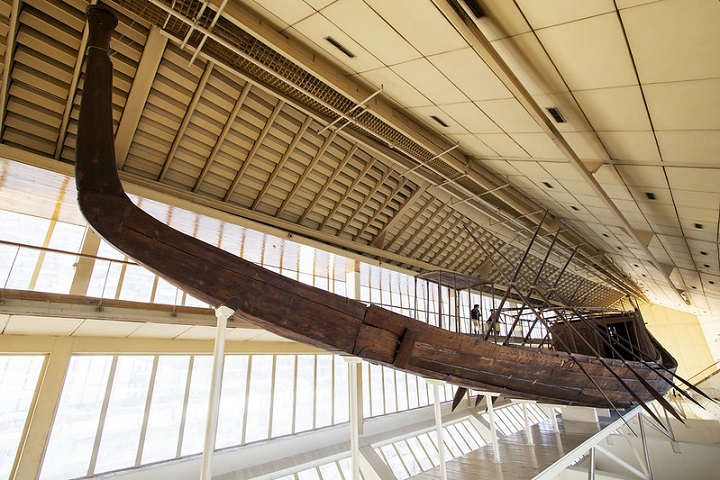
Near the pyramid, the remains of a 141-foot cedar wood ship were discovered in a pit. This ship, restored over many years and now housed in a museum near the pyramid, may have symbolized Khufu’s journey with the gods, particularly the sun god Ra. Another, less well-preserved ship, may lie in a second sealed pit.
For all the grandeur of Khufu’s pyramid and funeral boat, the only known portrait of the king is a tiny, 3-inch-high ivory statue. Though it was once easy to assume that such a massive construction required forced labor, evidence suggests otherwise. Instead, the legacy of these rulers and their grand structures is more complex than ancient myths and stories might suggest.

Comments