
Akhenaten’s reign is notable in ancient Egyptian history for its bold artistic shifts, the founding of a new religious capital, and mysteries surrounding royal succession. Above all, Akhenaten is remembered for promoting an early form of monotheism centered around Aten, the sun god. For Akhenaten, there was only one god, and only he held a unique connection with this divine entity.
Originally named Amenhotep IV, Akhenaten ascended to the throne around 1349 BCE. His early rule saw traditional projects, including works at the Karnak Temple dedicated to Amun, and in the rich lands of Nubia. However, in the third year of his reign, he marked a significant departure from tradition by celebrating a Jubilee Festival, a ritual renewal typically held after 30 years of rule. He constructed buildings at Karnak using small stone blocks, called talatat, that became distinctive of his reign.
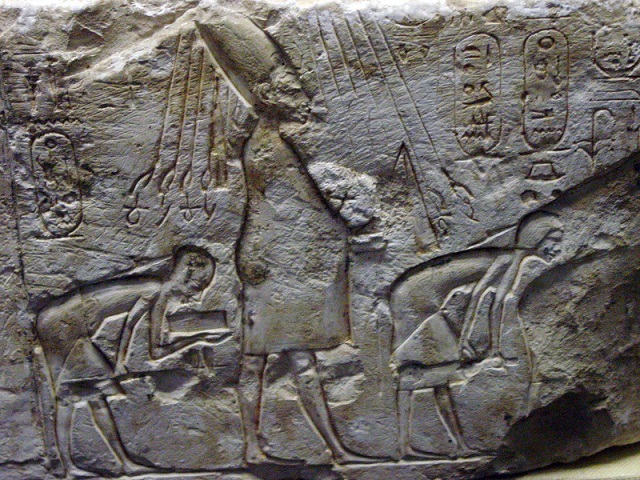
Initially, Akhenaten’s projects embraced various cults, but by the time of the Jubilee, his focus was on Aten, now depicted not as a falcon-headed man but as the sun disc, with rays ending in hands extending toward the royal family.
Artistic Innovations and the Role of Nefertiti
At Karnak, colossal statues of Akhenaten were crafted, showcasing exaggerated, androgynous features, such as a drawn-out face and wide hips. These statues set him apart from the mortal world, emphasizing his divine role. The Aten cult also gave prominence to royal women, particularly Queen Nefertiti, who formed part of a divine triad with Akhenaten and Aten. Nefertiti’s status helped legitimize the new religious order, allowing royal women to take on semi-divine roles and serve as stand-ins for goddesses.
Aten’s Rise and the Founding of Akhetaten (Amarna)
Akhenaten’s devotion to Aten intensified. He changed his name to Akhenaten, meaning “Effective for the Aten,” and redirected funds from traditional temples to Aten’s cult. In year five of his reign, Akhenaten announced the construction of a new city, Akhetaten (modern-day Amarna), located between Memphis and Thebes. This move away from Thebes may have been driven by a desire to distance himself from the powerful Amun priesthood.
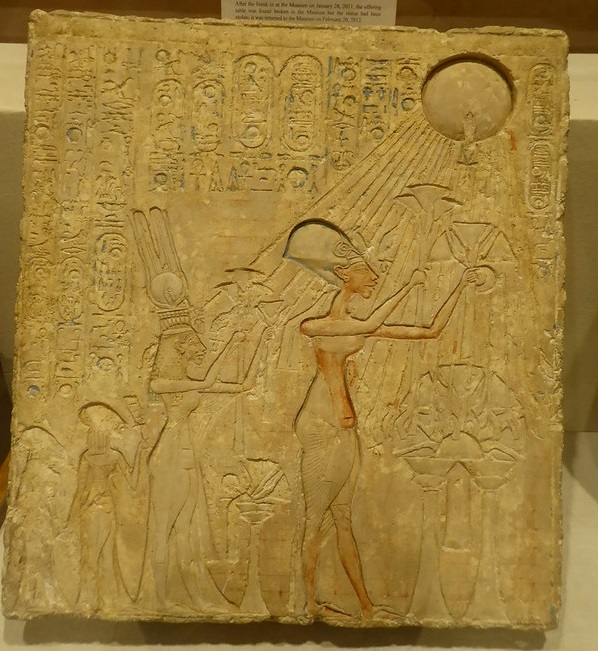
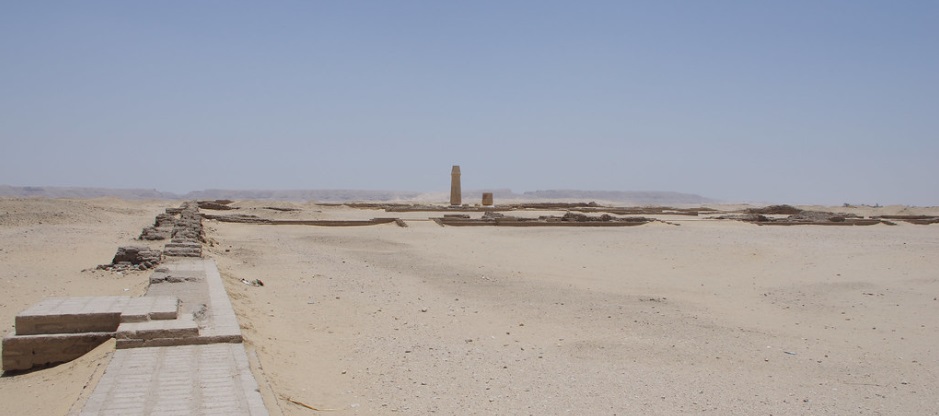
Akhetaten quickly became a sprawling city with vast, open-air temples dedicated to Aten, left unroofed to let in sunlight, eliminating the need for cult statues. The city’s architecture, decoration, and art celebrated life and nature, from scenes of animals to depictions of the royal family. These works often showed the king and his family sharing intimate moments, such as kissing and embracing, highlighting a new artistic fluidity.
The People of Akhetaten and the Aftermath
Despite the grandeur of Akhetaten, not all followed Akhenaten’s religious reforms. Archaeological findings from non-elite cemeteries at Amarna indicate difficult living conditions, with signs of poor nutrition and hard labor. Some burials still included images of traditional gods, suggesting that Akhenaten’s monotheistic reforms did not entirely erase Egypt’s long-held religious beliefs.
Akhenaten’s rule lasted 17 years, but after his death, likely from unknown causes, Akhetaten was quickly abandoned. His successors, including Tutankhaten (who would later be known as Tutankhamun), reinstated Egypt’s traditional gods and moved the royal court back to Memphis. The city of Akhetaten was dismantled, and its stone structures were repurposed for other building projects.
Akhenaten’s legacy remains controversial. To later Egyptian rulers, he was a heretic, and his name was omitted from king lists. Yet today, he is sometimes viewed with more sympathy, seen as a ruler who dared to challenge the status quo and bring about profound spiritual change. Whether in ancient Egypt or elsewhere, Akhenaten’s reign invites reflection on the forces that drive religious and societal transformation.

Comments