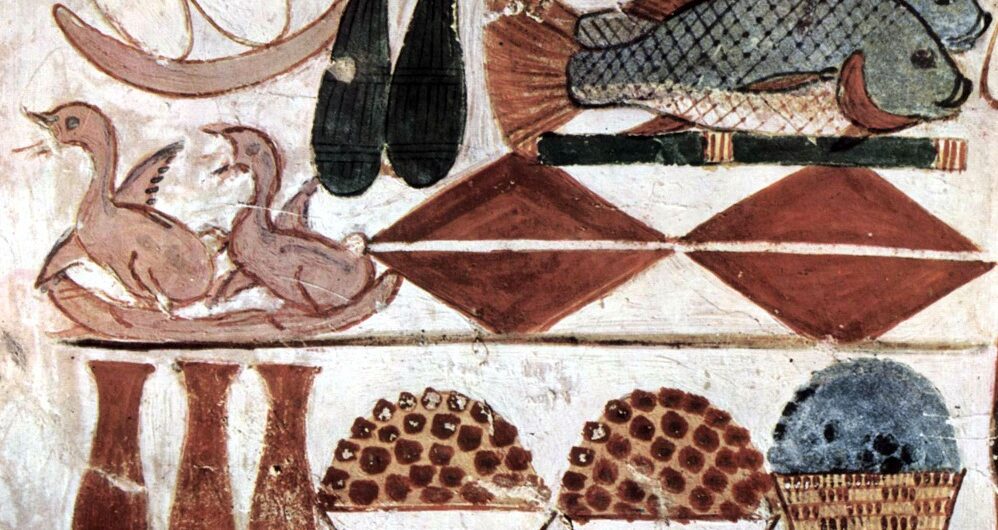
Ancient Egyptian Cuisine The ancient Egyptians enjoyed a diverse and rich diet, with many of their culinary staples echoing modern tastes. In comparison to other ancient civilizations, their access to a variety of high-quality foods was unparalleled, largely thanks to the fertile lands surrounding the Nile River. The Nile not only provided irrigation for crops but also supported livestock and fishing. This abundance allowed ancient Egyptians to cultivate a wide range of foodstuffs that nourished both the wealthy elite and the common people. What Did the Ancient Egyptians Eat and Drink? The diet of ancient Egyptians was built around a few key staples, primarily bread and beer. These two items formed the backbone of their daily meals and were consumed by both the rich and poor. Bread, made from barley or emmer wheat, was baked daily, often with the help of laborious techniques. Women typically took on the task of grinding the grain into flour. In an effort to speed up the process, sand was sometimes mixed in during grinding, which later caused health problems. Many mummies have been found with teeth worn down to the pulp due to years of eating bread laced with sand. The dough, made from flour mixed with water and yeast, was placed into clay molds and baked in stone ovens. Beer was equally important in the daily diet. To make beer, ancient Egyptians used a unique type of bread, known as ‘beer bread.’ This bread contained a higher concentration of yeast and was baked at lower temperatures to keep the yeast culture alive. The bread was then crumbled into water-filled vats and left to ferment, producing a thick and frothy beer that was highly nutritious. Unlike modern beer, this version was consumed out of necessity because the Nile's water was unsafe to drink. The
Ancient Egyptian Cuisine The ancient Egyptians enjoyed a diverse and rich diet, with many of their culinary staples echoing modern tastes. In comparison to other ancient civilizations, their access to a variety of high-quality foods was unparalleled, largely thanks to the fertile lands surrounding the Nile River. The Nile not only provided irrigation for crops