
Memphis, an ancient city with a storied past, holds a significant place in Egypt’s history and mythology. While it may appear fragmented compared to Luxor today, its origins are shrouded in myth and legend, as recounted by Herodotus. According to tradition, Menes, the first Pharaoh around 3050 BC, diverted the Nile towards the east side of the valley to build Memphis on reclaimed land or atop a natural mound, symbolizing the city’s birth amidst the fertile lands of the Nile.
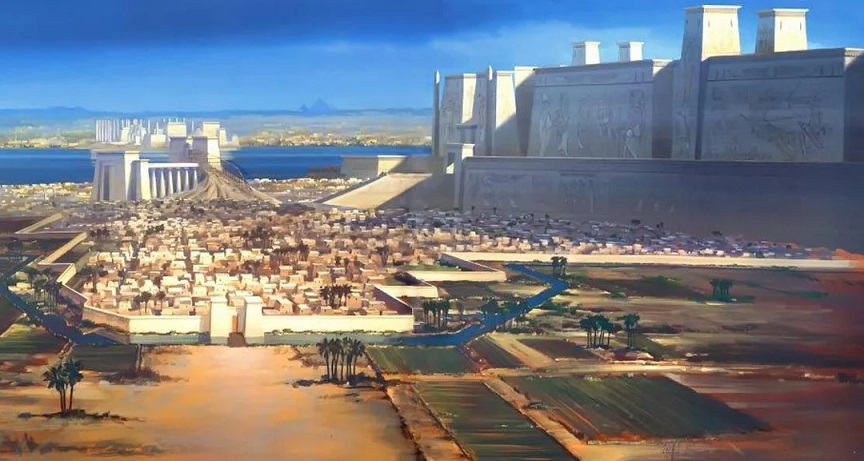
Memphis served as the capital of the first nome of Lower Egypt and later became the nation’s capital during the Old Kingdom. Throughout Egyptian history, it remained a pivotal political and cultural center, earning its place as one of the most important cities in ancient Egypt. The patron deity of Memphis was Ptah, the god of craftsmen, and the grand temple dedicated to Ptah and other Egyptian deities rivaled those found in Luxor, showcasing the city’s religious significance.
Originally known as Inebu-hedj, meaning “white walls,” Memphis was also referred to as Ankh-Tawy, signifying “life of the two lands,” and Mekhat-Tawy, representing the “scale of the two lands.” These names highlighted Memphis’s strategic location bridging Lower and Upper Egypt, symbolizing unity and balance in Egyptian civilization.
During the New Kingdom, Memphis adopted the ancient Egyptian term Mn-Nefer, translating to “Enduring and beautiful,” reflecting the city’s enduring legacy and splendorous past.
The ruins of ancient Memphis lie near the modern village of Mit-Rahina, south of Giza. Visitors can explore the remnants of the great Temple of Ptah, once among Egypt’s foremost religious centers. The temple complex includes additions by Ramses the Great, such as a smaller temple dedicated to Ptah and another to Ptah and Sekhmet. Although time has weathered many of these structures, they still echo the grandeur of Egypt’s glorious city of Memphis.

One of the notable attractions in Memphis is the Colossal of Ramses the Great, a massive statue that once adorned the city. Today, remnants of this colossal statue can be seen, including a colossal located at the entrance of the Grand Egyptian Museum. Another significant find is a nearly 10-meter-tall statue of Ramses the Great near the southern gate of the great temple, now housed in a museum specially designed for its display, despite missing its feet. These colossal statues serve as enduring reminders of Memphis’s royal heritage and grandeur.

Comments