“Life to the strong bull, Beloved of Maat, King of Upper and Lower Egypt, Son of Ra, Ramses beloved of Amun, Beloved of Rahorakhty, the great god, Beloved of Amun, King of the gods.”
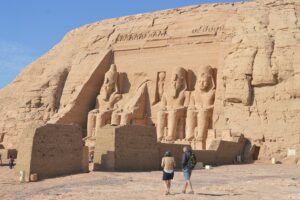
Great Temple of Abu Simbel
These titles and epithets resound through history, honoring one of ancient Egypt’s most illustrious pharaohs, Ramses II. Amidst the sands of time, his legacy endures in the colossal monuments he left behind, none more awe-inspiring than the temples of Abu Simbel.
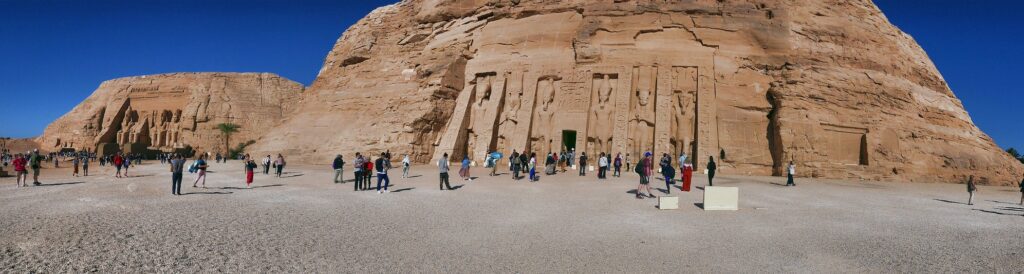
Located in the heart of ancient Nubia, near the modern town of Abu Simbel in southern Egypt, these temples stand as a testament to Ramses’ grandeur and the ingenuity of ancient Egyptian architects. Carved into the sandstone cliffs during the 13th century BCE, the Abu Simbel complex comprises two main temples: the Great Temple of Ramses II and the smaller Temple of Hathor and Nefertari.
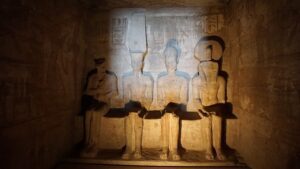
Every year, on both the 22nd of October and February, a celestial spectacle unfolds at Abu Simbel, known as the Abu Simbel sun phenomenon. As the first rays of the morning sun pierce the darkness, they illuminate the inner sanctum of the Great Temple, gradually advancing towards its holiest chamber. This phenomenon, meticulously engineered by the ancient Egyptians, reflects their deep understanding of astronomy and their reverence for solar deities like Ra and Horus.
Ramses II, often hailed as Ramses the Great, was not merely a warrior-king but also a visionary builder. His reign marked a golden era of monumental construction, with projects ranging from the temples of Luxor and Karnak to the colossal statues at Abu Simbel. Each structure served as a testament to Ramses’ divine mandate and his role as a bridge between mortal rulership and the celestial realm.
The story of Abu Simbel begins with Ramses’ strategic choice of location. The twin mountains flanking the temples, known as Meha and Abshik (Ibshik), held profound religious significance in ancient Egyptian cosmology. Meha was associated with the falcon-headed god Horus, symbolizing kingship and protection, while Abshik was linked to the goddess Hathor, patroness of love, music, and joy.
By the 15th year of his reign, Ramses embarked on the monumental task of carving the temples into the living rock of Abu Simbel. The larger of the two temples, dedicated to the gods Amun-Ra, Ptah, and Rahorakhty, showcased Ramses’ divine lineage and his close association with the pantheon. The colossal statues of Ramses flanked by these deities conveyed a message of divine kingship and eternal rule.
The Two Temples of Abu Simbel
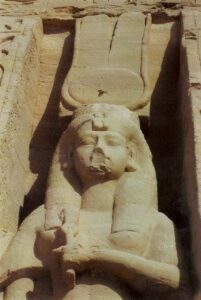
Adjacent to the Great Temple stands the smaller but equally significant Temple of Hathor and Nefertari. This temple, dedicated to the goddess Hathor and Ramses’ beloved wife Nefertari, highlights the importance of divine femininity and the role of queenship in ancient Egypt. The reliefs and inscriptions within depict Nefertari’s coronation by Isis, emphasizing her elevated status and h
Abu Simbel Sun Phenomenon
er enduring connection to the divine.
One of the most captivating aspects of the Abu Simbel temples is their alignment with the sun’s annual journey. On the mornings of October 22nd and February 22nd, the sun’s rays penetrate the inner sanctum of the Great Temple, illuminating the statues of Ramses and the gods in a precise sequence. This solar alignment, a testament to ancient Egypt’s astronomical prowess, symbolizes the eternal cycle of life, death, and rebirth.
The intricate symbolism embedded within the Abu Simbel temples extends beyond architectural marvels. The entrance of the Great Temple, adorned with statues of baboons and inscriptions of Ramses’ titles, serves as a celestial calendar marking the hours of the day and night. Each statue within the temple, whether depicting Ramses or the gods, carries layers of meaning decipherable to those versed in ancient Egyptian theology.
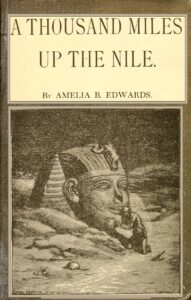
A Thousand Miles Up The Nile, Amelia Edwards
The Abu Simbel sun phenomenon, although rooted in ancient mythology and astronomy, continues to captivate modern audiences. The first documented observation of this celestial event dates back to the 19th century when writer Amelia Edwards marveled at the precision of the solar alignment. Her accounts, published in the book “A Thousand Miles Up the Nile,” brought global attention to Abu Simbel’s mystical allure.
Scholars and historians have long pondered the significance of the specific dates chosen for the sun phenomenon. Some theories suggest a connection to Ramses’ birthday or coronation, while others propose links to agricultural cycles or celestial events. Regardless of the exact rationale, the enduring legacy of Abu Simbel’s solar alignment speaks to the enduring mysteries of ancient Egypt and the quest for cosmic harmony.
Beyond the celestial spectacle, the Abu Simbel temples embody Ramses II’s multifaceted legacy. As a warrior, he expanded Egypt’s borders and secured its prosperity. As a builder, he erected monuments that transcended mortal lifespans, ensuring his eternal presence in the annals of history. As a patron of the arts and religion, he fostered a cultural renaissance that echoed through the ages.
The love story between Ramses II and Nefertari, immortalized in the reliefs of Abu Simbel, adds a poignant human dimension to the temples’ grandeur. Despite Nefertari’s passing, Ramses’ devotion endured, manifesting in the exquisite tomb he commissioned for her in the Valley of the Queens. This tomb, devoid of Ramses’ images and dedicated entirely to Nefertari, stands as a testament to their enduring bond.
Queen Nefertari
The Abu Simbel temples and the annual sun phenomenon encapsulate the essence of ancient Egypt’s spiritual and scientific achievements. They stand as monuments to human ingenuity, cosmic reverence, and the eternal quest for immortality. As visitors gaze upon the colossal statues and witness the sun’s dance within the temple’s chambers, they are transported back in time, enveloped in the timeless magic of Ramses’ reign and the enduring legacy of Abu Simbel.
About Author
Ramses XII
Ramses XII is a passionate author and expert tour guide with over 15 years of experience bringing Egypt’s ancient wonders to life. Backed by academic depth and a strong commitment to heritage preservation, he’s known for his engaging publications and unforgettable private tours. Ramses specializes in high-end VIP experiences and cutting-edge Egyptology tours, offering guests a unique blend of luxury, discovery, and true insider knowledge.
* E-mail: ramses@ramsesxii.com
* Cell: +201010014517


Comments