
Tell El-Amarna, situated approximately 10 kilometers south of modern Mallawi, stands as a remarkable testament to ancient Egyptian history. It was the ancient Akhetaten or “Horizon of the Aten,” serving as the short-lived capital and cult center of the heretic Pharaoh Akhenaten during much of his reign from 1353 to 1333 BC. Nestled between the

Memphis, an ancient city with a storied past, holds a significant place in Egypt’s history and mythology. While it may appear fragmented compared to Luxor today, its origins are shrouded in myth and legend, as recounted by Herodotus. According to tradition, Menes, the first Pharaoh around 3050 BC, diverted the Nile towards the east side

Cairo stands today as the vibrant capital of modern Egypt, teeming with around 10 million inhabitants. While its modern history is well-documented, tracing back to the Islamic conquest of Egypt, its roots delve even deeper into antiquity, with part of the city encompassing the ancient realm of Heliopolis (known as Ain-Shams), revered in the ancient

Alexandria, the largest city on the Mediterranean and the third-largest city in Egypt, boasts a rich history that spans millennia. In ancient Egyptian times, Alexandria held little significance during the Old Kingdom, only becoming a trading post during the era of Ramses the Great. However, its true transformation began with Alexander the Great, who founded

Khufu stands as one of history’s most renowned pyramid builders, credited with the construction of the Great Pyramid of Giza, a monumental feat that has captivated the world for millennia. However, the popular narrative surrounding Khufu, especially as portrayed by Herodotus, paints a picture of oppression and cruelty. Let’s delve into the reality behind the
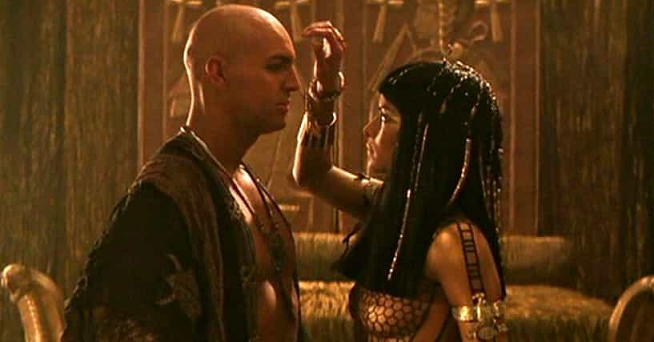
Imhotep is a name that conjures images of Hollywood’s most infamous villains, an iconic mummy whose portrayal in movies has overshadowed his real historical significance, even eclipsing the fame of King Tutankhamun. However, delving into the true story of Imhotep reveals a figure of immense importance in ancient Egypt, far removed from the fictionalized narratives

Snefru, the enigmatic ruler of Egypt during the fourth dynasty, was a titan of his era, leaving behind a legacy that would define the ancient world for centuries. Reigning for at least two decades, Snefru’s impact was monumental, marked by his construction of three colossal pyramids and nearly seven smaller ones, earning him the title

In 1896, during archaeological excavations in Egypt, a significant discovery was made that would challenge established beliefs about ancient Egyptian mummification practices. It all began when villagers from Geblen, now known as Naga El-Ghriera in Egypt, led British archaeologist Wallis Budge to a burial ground where they claimed to have uncovered mummies. This led to