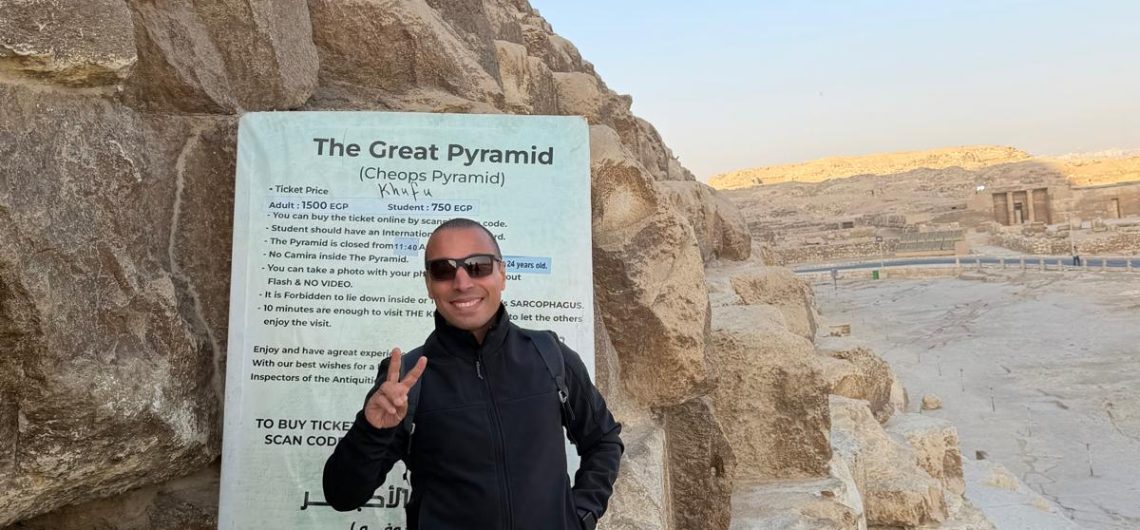
Giza Pyramids VIP Access: Is It Worth the Price? A Complete Guide I get asked this question almost every single week, usually in the same nervous tone: "Ramses, is the VIP access actually worth it, or am I just paying for a fancier version of the same thing everyone else gets?" Fair question. Let me answer it honestly; not as a guide trying to upsell you, but as the guy who has personally walked these chambers more times than I can count, at every price point, with every kind of traveler. First, Let's Be Clear: There Isn't Just One "VIP" This is where most people get confused, and where a lot of tour operators are, frankly, dishonest with you. "VIP" at Giza can mean three very different experiences: The comfort upgrade. Skip-the-line entry, a private lounge while your tickets are handled, and a golf cart gliding you between Khufu, Khafre, and Menkaure instead of trudging through sand in the heat. No crowds pushing past you, no standing in line under the sun. This is VIP as ease. Read more about this tour The knowledge upgrade. A full day with an Egyptologist — not a guide reading from a script, but someone who can tell you why the Sphinx has no nose, why Khafre's pyramid still has casing stones at the top, and what it actually meant to be buried as a pharaoh. This is VIP as depth. Read more about this tour The access upgrade. This is the one people really mean when they whisper "VIP" like it's a secret password. This is walking into the Great Pyramid two hours after it closes to the public, alone, standing inside the King's Chamber next to the granite sarcophagus with nobody else breathing the same air as you. This is VIP as
Giza Pyramids VIP Access: Is It Worth the Price? A Complete Guide I get asked


