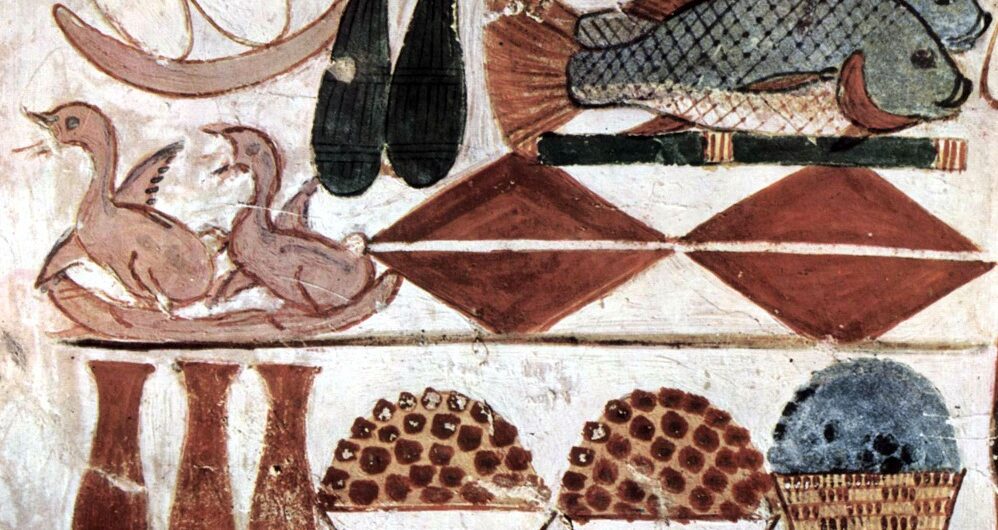
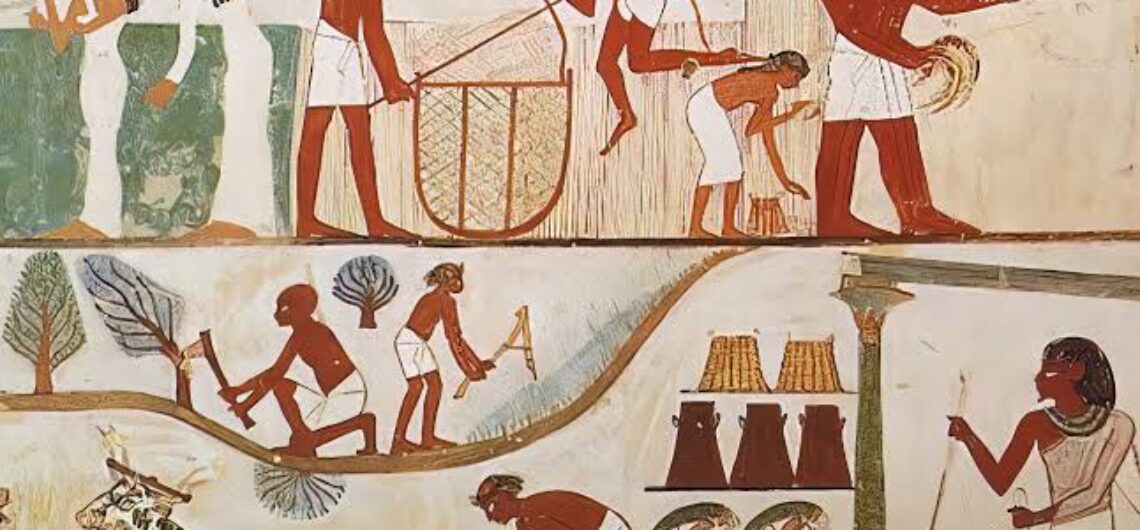
Ancient Egyptian Cuisine The ancient Egyptians enjoyed a diverse and rich diet, with many of their culinary staples echoing modern tastes. In comparison to other ancient civilizations, their access to a variety of high-quality foods was unparalleled, largely thanks to the fertile lands surrounding the Nile River. The Nile not only provided irrigation for crops but also supported livestock and fishing. This abundance allowed ancient Egyptians to cultivate a wide range of foodstuffs that nourished both the wealthy elite and the common people. What Did the Ancient Egyptians Eat and Drink? The diet of ancient Egyptians was built around a few key staples, primarily bread and beer. These two items formed the backbone of their daily meals and were consumed by both the rich and poor. Bread, made from barley or emmer wheat, was baked daily, often with the help of laborious techniques. Women typically took on the task of grinding the grain into flour. In an effort to speed up the process, sand was sometimes mixed in during grinding, which later caused health problems. Many mummies have been found with teeth worn down to the pulp due to years of eating bread laced with sand. The dough, made from flour mixed with water and yeast, was placed into clay molds and baked in stone ovens. Beer was equally important in the daily diet. To make beer, ancient Egyptians used a unique type of bread, known as ‘beer bread.’ This bread contained a higher concentration of yeast and was baked at lower temperatures to keep the yeast culture alive. The bread was then crumbled into water-filled vats and left to ferment, producing a thick and frothy beer that was highly nutritious. Unlike modern beer, this version was consumed out of necessity because the Nile's water was unsafe to drink. The
Ancient Egyptian Cuisine The ancient Egyptians enjoyed a diverse and rich diet, with many of
The Sphinx’s Missing Nose: Myth, Mystery, and the Search for Answers This image shows a reconstruction of the Sphinx in its original, glorious, and fully intact form, vividly colored and pristine. But how did it come to look the way it does today? Who broke its nose? Did the Sphinx once have a beard, and if so, where is it now? What happened to the cobra that once adorned its forehead? Today, however, the monument is missing significant elements, raising questions about its transformation over time. This article explores the Sphinx’s construction, its mysterious missing parts, and the preservation efforts that have taken place over the centuries. This article addresses key questions about the Sphinx, including "Why was the Sphinx built?", "Sphinx mythology,", "Sphinx facts," and "How old is the Sphinx?" providing a deeper look into the history and mysteries surrounding this ancient monument. The Creation of the Sphinx The Sphinx, created around 2500 BC, is widely believed to have been built during the reign of King Khafre, the third king of Egypt's Fourth Dynasty and the builder of the second pyramid at Giza. While many Egyptologists attribute the statue to Khafre, some believe it might represent his father, Khufu. Others suggest that the Sphinx was built during the reign of Khafre’s brother, Djedefre, to honor either Djedefre himself or his father Khufu. The debate remains ongoing. The Sphinx and Prince Thutmose's Dream Around 1400 BC, the Sphinx became submerged in sand. According to legend, during a hunting trip near Giza, a young prince named Thutmose fell asleep in the shadow of the buried Sphinx. In his dream, the Sphinx, identifying itself as the god Horemakhet Khepri Ra Atum, spoke to him: "Look upon me, O my son Thutmose; I am thy father, Harmakhis-Khopri-Ra-Tum. The sand has covered me. Save
The Sphinx’s Missing Nose: Myth, Mystery, and the Search for Answers This image shows a
Ramses II: The Greatest Pharaoh of Ancient Egypt Ramses II, often referred to as Ramses the Great, is one of the most iconic figures in ancient Egyptian history. His reign, which spanned 66 years from 1279 BC to 1213 BC, was marked by extraordinary accomplishments in military strategy, diplomacy, architecture, and governance. As the third pharaoh of the 19th Dynasty, Ramses II not only secured Egypt's borders and expanded its territory but also left behind a legacy that continues to captivate historians, archaeologists, and the general public to this day. Early Life and Rise to Power When was Ramses II born? Born in 1303 BC, Ramses II was the son of Pharaoh Seti I and Queen Tuya. His birth marked the continuation of a lineage that had been elevated to royalty just a generation earlier by his grandfather, Ramses I, a military commander who had risen to the throne due to his prowess and loyalty to his predecessor, Horemheb. Ramses II was named after his grandfather, a gesture that not only honored the family’s origins but also signified the continuity of its rising power. Ramses was raised in the royal court, where he received a comprehensive education in the arts of war, governance, and religion. His father, Seti I, who was a formidable military leader himself, involved Ramses in state affairs and military campaigns from a young age. By the time Ramses was a teenager, he was already leading armies into battle alongside his father, gaining invaluable experience in the field. This early exposure to the complexities of leadership and warfare set the stage for Ramses to become one of Egypt’s most successful pharaohs. At the age of 14, Ramses was appointed as the Prince Regent, a position that effectively made him the heir apparent to the throne. His older
Ramses II: The Greatest Pharaoh of Ancient Egypt Ramses II, often referred to as Ramses
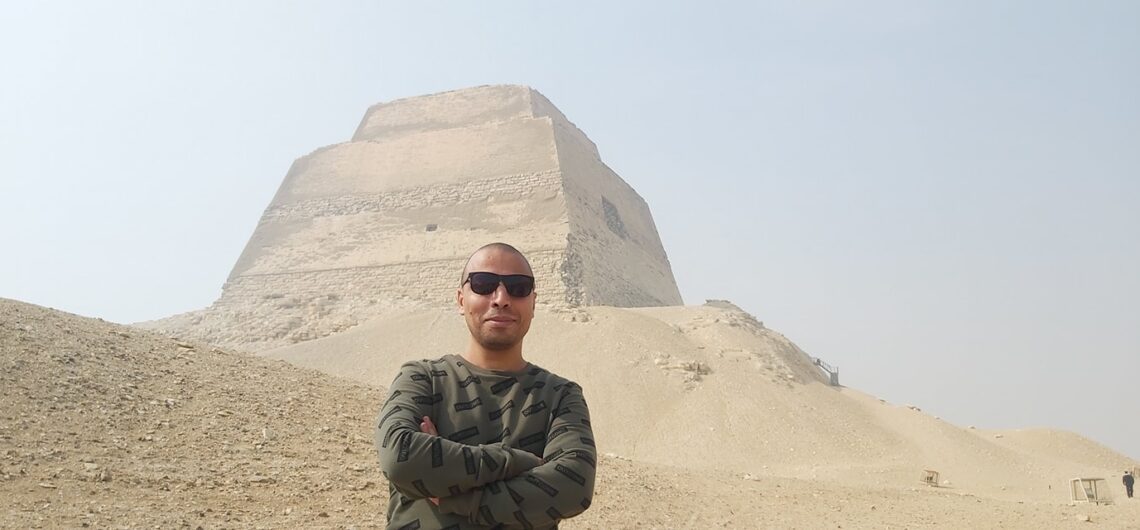
Nestled along the western edge of the Faiyum Oasis, about 100 kilometers south of Cairo, lies the Meidum Pyramid—a captivating site that offers a unique glimpse into the architectural evolution of ancient Egypt. While often overshadowed by the more famous pyramids of Giza, Meidum is a treasure trove of history, intrigue, and architectural innovation. As a tour guide specializing in Egypt’s hidden gems, I invite you to join me on a journey to uncover the secrets of the Meidum Pyramid and explore its significance in the annals of ancient Egyptian history. The Enigmatic History of Meidum The Meidum Pyramid stands as one of Egypt’s earliest attempts to construct a true pyramid and marks a significant milestone in the evolution of pyramid building. Initially commissioned by Pharaoh Huni, the last king of the Third Dynasty (around 2600 BCE), it was later completed and modified by his successor, Pharaoh Sneferu, the founder of the Fourth Dynasty. This pyramid was originally designed as a step pyramid, similar to the famous Pyramid of Djoser at Saqqara, and was later encased in smooth limestone to create a classic pyramidal shape. Despite its ambitious design, the Meidum Pyramid experienced structural instability, leading to the collapse of its outer layers. This collapse transformed its appearance into a unique shape with a tower-like core and surrounding debris, earning it the nickname "The Collapsed Pyramid." While initially seen as a failure, the Meidum Pyramid was a crucial learning experience that informed the construction of later pyramids, including the Bent Pyramid and the Red Pyramid at Dahshur. Architectural Evolution and Significance The Meidum Pyramid is often considered a bridge between the step pyramids of the Third Dynasty and the smooth-sided pyramids of the Fourth Dynasty. It marks the transition from experimental designs to the more refined techniques that would be
Nestled along the western edge of the Faiyum Oasis, about 100 kilometers south of Cairo,
In the vast desert of Egypt, where the sands hold whispers of ancient kings, lies Dahshur, a site steeped in history and mystique. This remarkable place is where the visionary Pharaoh Snefru first realized his monumental architectural ambitions, leaving a legacy that continues to inspire awe and wonder. Dahshur is more than just a collection of ancient pyramids; it is a testament to human ingenuity, ambition, and the enduring quest for immortality. The Visionary Pharaoh: Snefru’s Ambitious Dream Around 2600 BC, Pharaoh Snefru ascended to the throne as the first Pharaoh of the Fourth Dynasty. Snefru was a ruler with grand ambitions, determined to create Egypt's first true pyramid. His vision was nothing short of monumental, as he sought to craft a symbol of divine authority and everlasting legacy that would stand the test of time. Snefru's pioneering journey into pyramid construction began with the Bent Pyramid, located at Dahshur. This bold architectural experiment marks a significant milestone in the evolution of pyramid building. The Bent Pyramid stands out with its unique and distinct angle, reflecting the early challenges faced by architects in their pursuit of structural perfection. Its abrupt change in slope midway through the structure serves as a testament to the lessons learned in stability and grandeur during this formative period of pyramid construction. Despite its unconventional shape, the Bent Pyramid laid the foundation for future architectural advancements. Snefru's determination to learn from mistakes and push forward led to the commissioning of the Red Pyramid, also known as the North Pyramid. Here at Dahshur, Snefru achieved what no one had before: the creation of the first successful smooth-sided pyramid in Egyptian history. With its crimson hue and soaring structure, the Red Pyramid symbolizes a breakthrough in architectural design and lays the groundwork for the monumental pyramids that would
In the vast desert of Egypt, where the sands hold whispers of ancient kings, lies
The Egyptian Pyramids represent an enduring symbol of ancient civilization, engineering prowess, and the intricate beliefs surrounding the afterlife. These pyramid-shaped monuments, primarily constructed as funerary tombs and ceremonial complexes for the departed pharaohs, are emblematic of Egypt's rich cultural and historical heritage. Spanning various periods of ancient Egyptian history, from the Old Kingdom (2575 BC to 2150 BC) to the Middle Kingdom (2050-1550 BC) and beyond, these architectural marvels continue to captivate and intrigue people worldwide. To date, approximately 118 pyramids of various definitions have been discovered across Egypt, although some sources cit e a slightly higher number, around 138. These pyramids are predominantly situated on the west bank of the River Nile, strategically placed to symbolize the journey of the deceased into the afterlife. Grouped into several clusters or pyramid fields, they serve as a testament to the meticulous planning and ingenuity of ancient Egyptian architects and laborers. The construction of pyramids evolved from earlier structures known as mastabas, which were mudbrick bench-like tombs built during the Early Dynastic Period. Mastabas featured rectangular funerary chambers with inward sloping sides, often containing burial chambers and serdabs for storing precious items and offerings. Over time, these mastabas evolved into more elaborate structures, culminating in the iconic pyramid form. The Step Pyramid of Djoser, also known as the Pyramid of Djoser, stands as the earliest known pyramid-like structure in Egypt. Built during the 3rd Dynasty of the Old Kingdom, it marked a significant advancement in architectural innovation. Initially, it began as a square mastaba-like structure but was later developed into a six-stepped monument with an underground labyrinth of chambers and galleries. Serving as the funerary tomb of Pharaoh Djoser, the Step Pyramid complex aimed to ensure his eternal rebirth and facilitate a successful afterlife journey. Subsequent pyramid constructions further refined the
The Egyptian Pyramids represent an enduring symbol of ancient civilization, engineering prowess, and the intricate
This ancient attendance sheet from 3,200 years ago in Ancient Egypt is quite a fascinating find. It's carved on limestone and covers 280 days of the year, listing 40 different names and dates in black ink. What makes it even more intriguing are the red notes detailing the reasons for absences: 1. Drinking with Khonsu 2. Daughter's bleeding 3. Libation to his father 4. Brewing beer 5. Building his house 6. Fetching stone for the scribe 7. Making remedies with Khons 8. Making remedies for the scribe's wife 9. Eye ailment 10. Embalming Hormose 11. Strengthening the door 12. Embalming his brother 13. Wife's bleeding 14. Bitten by a scorpion 15. Personal feast 16. Offering to a god Out of all these reasons, "drinking with Khonsu" caught my attention the most. It seems less dramatic compared to embalming, bleeding, or getting bitten by a scorpion. It stood out because I hadn't really considered that Ancient Egyptians would just hang out and have a drink together. While we often get drawn to the grandeur of the pyramids, pharaohs, and mummies, I've always been more curious about daily life back then. I imagine people going about their business, working, socializing, and cooking dinner much like we do today. Speaking of Khonsu, who exactly was he? What was his role or job in Ancient Egyptian society? Was "Khons" just a shortened version of Khonsu, or were they different individuals altogether? Back in the day, this attendance sheet was probably just mundane bureaucratic paperwork. Yet, reading it 3,200 years later is quite delightful. It's a reminder that, despite the vast differences in time and culture, humans haven't changed all that much. Taking a break to socialize and enjoy a drink with a friend was a legitimate reason to miss work even
This ancient attendance sheet from 3,200 years ago in Ancient Egypt is quite a fascinating
In 1817, Giovanni Belzoni, an Italian explorer, made an intriguing discovery in the Valley of the Kings. He stumbled upon a tomb, not adorned with any paintings, which had been previously searched by ancient explorers. Inside this tomb, Belzoni found a sizable chamber with a lone pillar at its center. The walls were un-plastered, revealing a raw and untouched quality. In one corner of this chamber, Belzoni and his team encountered a remarkable sight - two mummies lying on the ground, devoid of any clothing or casing. These mummies were identified as females, their hair still long and surprisingly well-preserved, though it could be easily separated from their heads. This discovery was documented by Belzoni in his notes from that period. Fast forward to modern times, specifically September of an unspecified year, and we encounter the famed Egyptian Egyptologist Dr. Zahi Hawass. He made headlines by suggesting the potential identification of Queen Nefertiti's mummy through cutting-edge technologies like CT scanning and DNA analysis. This breakthrough announcement hinted at the long-awaited resolution to a quest that spanned two centuries. The forthcoming discovery, expected to be officially confirmed by the year's end, was set to be a central piece in an upcoming exhibition titled "Daughters of the Nile," focusing on women from ancient Egypt. But who exactly was Queen Nefertiti, and why does her potential discovery hold such significance? Nefertiti was not only renowned for her striking beauty but also held a prominent position as the Great Royal Wife of King Akhenaten during his unique reign known as the Amarna period. Prior to her marriage to Akhenaten, little was known about Nefertiti or her lineage, except for her sister Mutbenret and her wet nurse named Tey. During Akhenaten's reign, Nefertiti was portrayed in unprecedented ways, often depicted alongside him in various scenes,
In 1817, Giovanni Belzoni, an Italian explorer, made an intriguing discovery in the Valley of
On September 27, 1822, Jean-Francois Champollion achieved a monumental breakthrough by deciphering Egyptian hieroglyphics, a language that had remained a mystery for centuries. This pivotal moment allowed Egyptian civilization to speak for itself through inscriptions on stone and papyrus, marking the birth of Egyptology as a scientific discipline. The catalyst for this decipherment was the renowned Rosetta Stone, an artifact that had captivated scholars for generations before finding its current residence at the British Museum. The Rosetta Stone's journey to the British Museum is a tale woven with historical intrigue and imperial rivalries. It was discovered in 1799 by French Lieutenant Pierre Francois Bouchard during Napoleon's campaign in Egypt. The stone, originally part of a fortification wall near the port of Rashid (Rosetta), bore inscriptions in three scripts: ancient Egyptian hieroglyphics, demotic script, and ancient Greek. This linguistic diversity presented a key opportunity for scholars to unlock the secrets of ancient Egyptian writing. After its discovery, the French quickly recognized the Rosetta Stone's significance and made copies available for study. However, it was the British who ultimately gained possession of the stone after defeating the French in Egypt in 1801. Colonel Tomkyns Hilgrove Turner escorted the stone to Britain, where it became a prized possession of the British Museum. The Rosetta Stone's presence in the British Museum has sparked ongoing debates about cultural heritage and ownership. While the stone holds immense historical value, its acquisition by the British during a period of imperial conquest raises ethical questions about rightful ownership. The French initially claimed ownership due to its discovery by their expedition, but the stone's subsequent transfer to British hands cemented its place in British historical collections. Modern international laws and conventions, particularly those outlined by UNESCO, govern the ownership and repatriation of cultural artifacts. However, the Rosetta Stone's unique
On September 27, 1822, Jean-Francois Champollion achieved a monumental breakthrough by deciphering Egyptian hieroglyphics, a
"But when we came to a golden shrine with doors closed and sealed, we realized that we were in the presence of the Dead King. We were to witness the spectacle such as no other man in our times had been privileged to see. Howard Carter The discovery of the tomb of King Tutankhamun in 1922 by Howard Carter marked a monumental event in the field of archaeology. Designated as KV-62, denoting its location in the King's Valley as tomb number 62, this find sent shockwaves across the globe, sparking widespread fascination and curiosity. For the first time in history, a royal Egyptian tomb was unearthed fully intact, providing a rare glimpse into the life and legacy of the young King Tut. However, this discovery was not without its challenges and controversies, leading to a prolonged dispute over the ownership and display of King Tut's treasures. While the treasures themselves remained in Egypt and were eventually transferred to the Egyptian Museum in Cairo, King Tut's mummy remained undisturbed in the tomb until 2007. It was in this year that the mummy was unveiled to the public for the first time, allowing people worldwide to witness the preserved remains of this ancient pharaoh. Around 2018, plans were set in motion for a gradual transfer of King Tutankhamun's entire collection from the Cairo Egyptian Museum to the Grand Egyptian Museum (GEM). This meticulous process aimed to ensure that the complete collection of King Tut would be housed in the state-of-the-art facilities of the GEM, ready to be showcased to visitors from around the world. Delving deeper into the history surrounding King Tut, there are several intriguing and lesser-known facts that shed light on his life and the era in which he lived. In 1996, French archaeologist Alain Zivie and his team made
“But when we came to a golden shrine with doors closed and sealed, we realized